Words

- by Roberto Rocha
- published from Indonesia
- on 2010.07.16
Sacrificing buffalo in Tana Toraja

The buffalo looked calm even though four of his brothers laid bloodied at his feet. It’s as if it knew that his whole life, all the years of pasture and fattening, was meant for this moment.
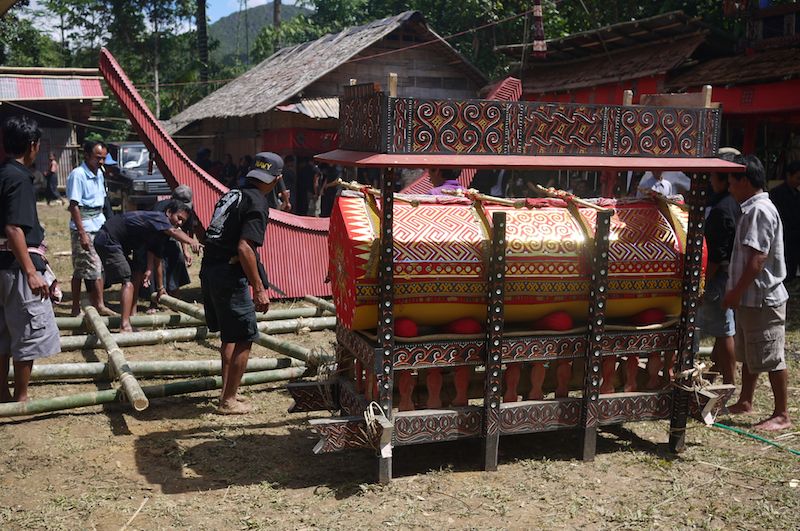
There was him and another dozen left to go. This was the burial ceremony of a wealthy person, and in Tana Toraja, a region of Indonesia’s Sulawesi island, the size of a funeral has to correspond to the social status of the deceased.
For this four-day ceremony, the departed’s family bought 24 buffalo. The average price for one is 60 million rupiyah, or US$6,500. That’s $150,000 in buffalo alone, not counting food for the hundreds of guests, decorators, ushers, or the labour and materials needed to erect all the temporary structures.
Despite being a major part of the burial ceremony, the sacrifice of a buffalo is remarkably unceremonious. The designated executioner gets the animal into a solid patch of ground, unsheathes his blade, and strikes at the throat. No chants, no ordained silence.
The sound of a kill is blunt and muted, like a dictionary being dropped on a mattress. The buffalo’s throat opens with a flap of skin exposing his heavy red muscles and white sinews of bone. If the executioner is experienced, a single strike will open vital arteries, turning the animal’s neck into a cascade of blood, and drawing cheers from the guests.
The killer we saw was still an apprentice, so the cut did not bleed. The buffalo reared back after the strike, startled, but not panicked by the massive gash under its head. Two men held it still while the executioner slashed further inside.
Perhaps animals, like humans, panic at the sight of their own blood. When the ground beneath it became drenched in red, that’s when the animal showed fear. It tried to run, but its foot was tied to a stake on the ground. It bucked the other way, and I began to doubt if that rope would hold. The cheering from the audience morphed into excited yelling as everyone in the general aim of its horns scampered in caution.
Buffalo accept death in largely spaced waves. This one stopped charging forward and began to stagger sideways. Its bearings betrayed confusion, no longer defiance. It looked around, at the cheering spectators, at the white people with the big cameras, at the two men charged with holding it down. The blood still gushed from the wound and every time it took a laboured breath, a fine red mist sprayed from the cut. It chanced one more escape, but instead it toppled on its side. I felt the earth shudder when it fell.
There are three reasons Torajans sacrifice buffalo at a funeral. First, they believe the souls of the buffalo escort the deceased into the afterlife, where he still enjoys the social status he had on earth. The more buffalo you have, the wealthier you are.
Second, it keeps their prestige in the community. A person must die as spectacularly as he lived.
And third, it’s a gesture of goodwill among the community. The animal’s meat is distributed among all those who helped organize the ceremony. Some buffalo are kept alive and given to the local church and to neighbouring villages.
Once a buffalo falls, it still bucks and spasms between moments of stillness, as though it’s collecting its last energies for a final reminder of its monumental strength. Blood pools quickly around its head and its breathing becomes shallower, slower. Panic gradually disappears from the animal’s eyes and you see the same calm that was there before the blade struck.
Then stillness. Its torso no longer swells with each breath. The blood reduces to a trickle. Five minutes pass and you know it’s dead.
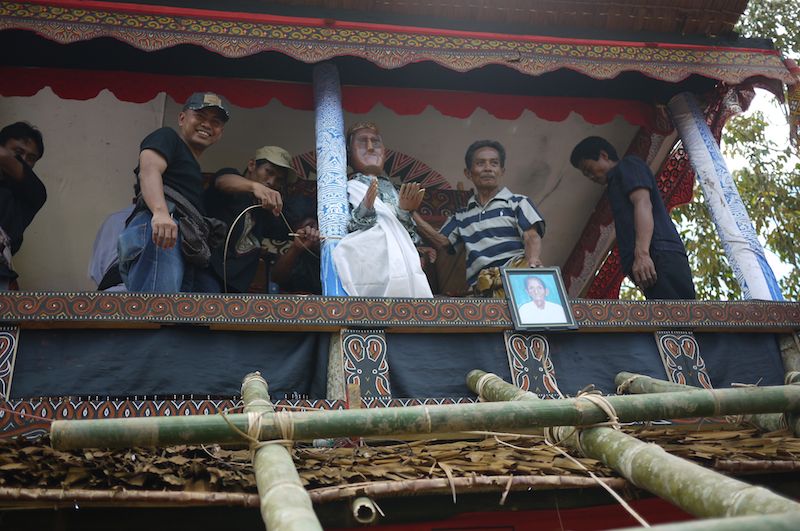
Then something happens. It’s like those movies where a flat-lining patient suddenly blips back to life, a hidden reservoir of life is summoned to action. The buffalo gets back on its feet and makes one final charge toward his killers, his watchers, the dead man in the elevated coffin, whatever is there. It’s the animal’s last affirmation, his way of saying to all those around him, “I was once alive as you are.”
And in this terminal stampede of resistance, he kicks up a mix of mud and blood towards the people watching, a kind of symbolic revenge against his voyeurs. Some of it fell on my arm, my pants, my camera case and my notebook.


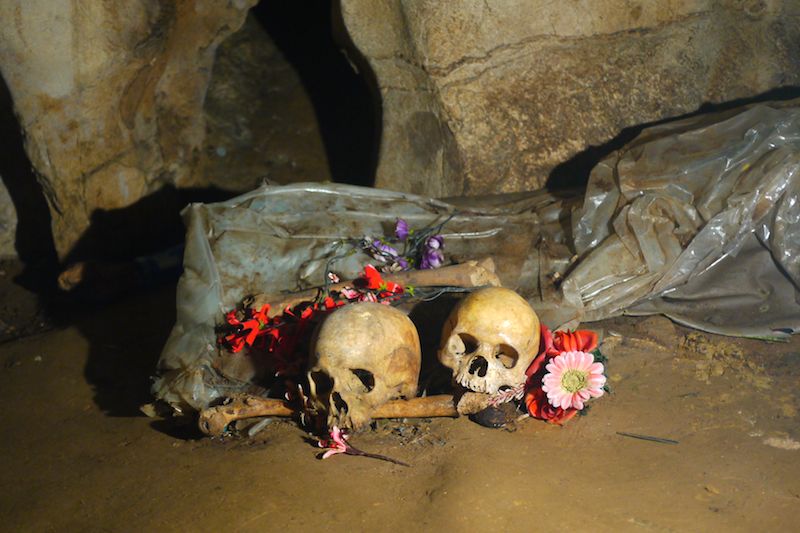
Click thumbnails below to see a photo gallery. Click the arrows at the bottom of each pic to advance.
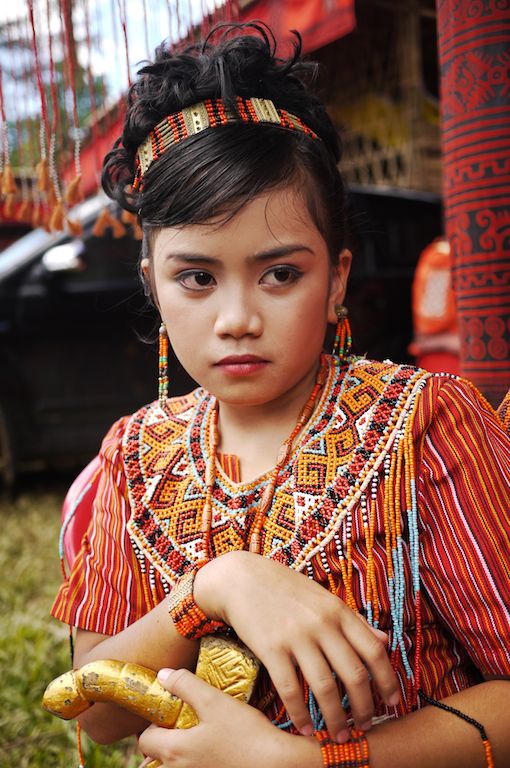
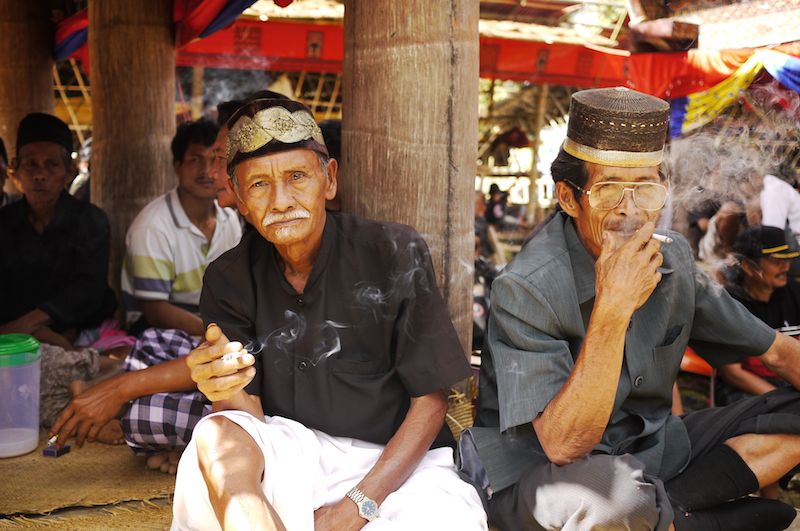
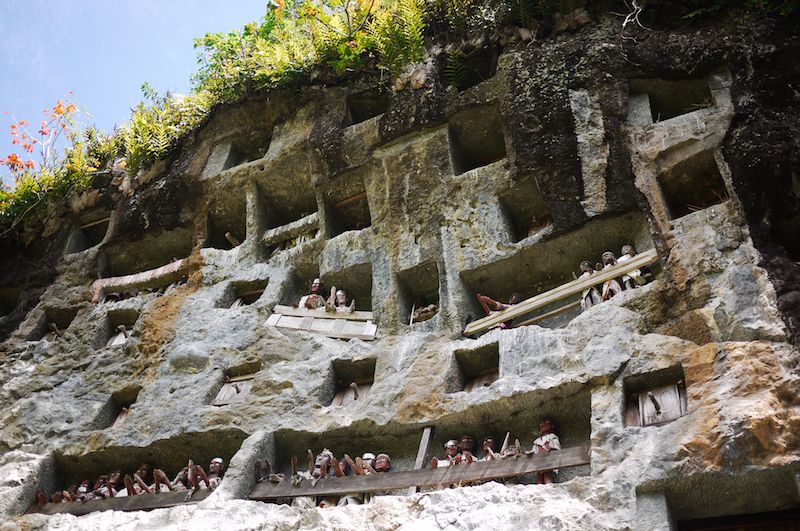
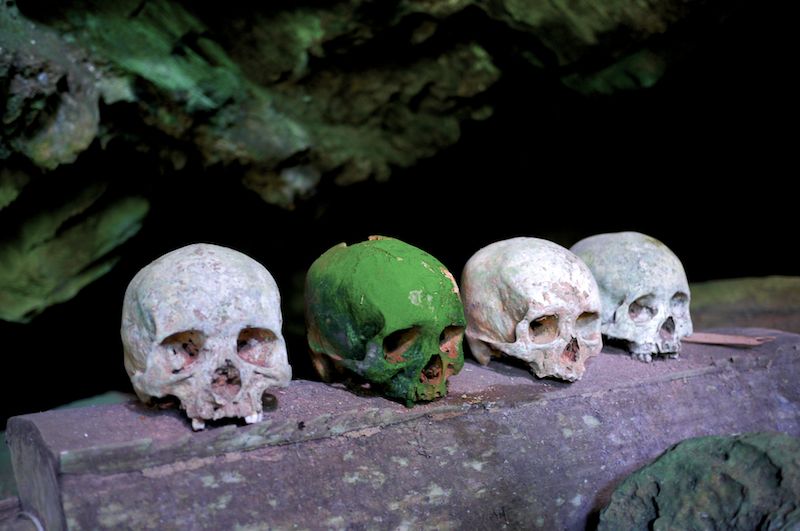
.
Comments
Custom Ad
Leave a comment