Words

- by Roberto Rocha
- published from Syria
- on 2011.01.28
Syria: internet censorship at its oddest
UPDATE: The Syrian government has opened access to Facebook and Youtube since this post was written.
.
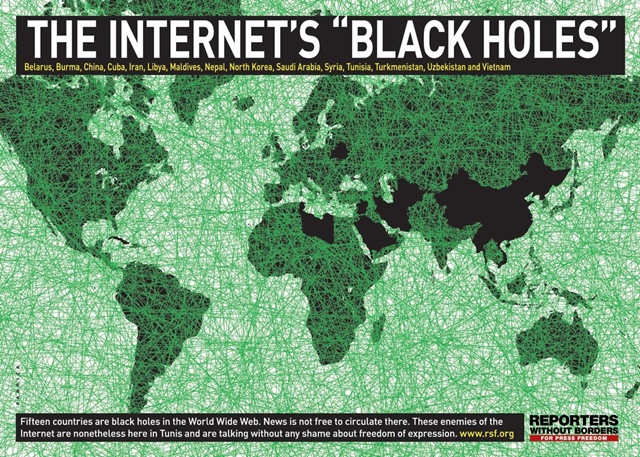
In Syria, Facebook and Youtube are blocked. But everyone knows how to get around it.
The word “proxy” is common knowledge. Most Internet cafés have proxies – servers that rout Internet traffic through other countries – already configured into the web browser. Some have anonymous surfing tools like Hotspot Shield installed.
Even the less tech-savvy know that simply putting an “s” after the “http” gives full access to Facebook.
Which all seems to beg the question: if the Syrian people flout the restrictions so openly, why does the government bother having them at all?
Different opinions
No one citizen, of course, knows for sure, but that doesn’t stop them from guessing. Although politics is a topic better left untouched, the Syrians who volunteer their opinions reveal a wide gamut of views.
“It’s part of the government’s plan to keep the people from realizing how bad their lives are,” said one dissenter, whose dissenting is usually done to visitors around a shisha.
Part of that stratagem, he says, is to keep people poor with exorbitant taxes. If they’re busy thinking about food, he posits, they’re not thinking about free speech.
Another Syrian, one who hangs the picture of the president on his wall out of pride, not obligation, looks at it differently.
“When new technologies appear, people use it for bad,” he says. A scorned lover, for example, may use social networks to distribute nude pictures of his ex-girlfriend, disgracing her and shaming her family. Honour killings, he claims, have happened because of this.
The government is simply protecting its people, he argues.
Another Syrian, one who was educated abroad and works for an international organization in Jordan, offers a third view: the government is protecting the people, but not from naked pictures. “It’s to keep the uneducated masses from being recruited by radical Muslim groups,” he said.
A secular country, Syria works hard to prevent the extremist violence that plagues other Arab countries. And it does this via some censorship.
Then why does the government allow people to circumvent the blocks so easily?
“Only people who really know about computers know how to get around it,” the first apologist offered. In other words, the government tolerates sedition only by a geek minority.
Slow openings
The first two arguments don’t really hold water. You don’t see people starving in Syria, and just about every urban dweller under 30 – those most likely to use technology subversively – know their way around a web browser.
What I think is happening is that a new generation of connected youth is dipping its toes in free expression and seeing what happens. And the government is probably observing.
Syrians still live with the slight suspicion that the government is listening to everything they say, a paranoia inherited from the 30-year rule of Hafez al-Assad, father of the current president and a hardline strongman.
But his son Bashar, a reformer and former computer nerd, was the one who brought the Internet to Syria. A society that lived under closed socialism for so long can’t be rushed into democracy, and the country is taking baby steps – some of them backwards – towards a more open society.
A half-hearted block of a few websites is one of them.
Comments
[...] as my predecessor, and temporary Technocité Mid East correspondent Roberto Rocha discovered. In Syria, he said social networking sites were blocked for the most part, but people were able to [...]
[...] as my predecessor, and temporary Technocité Mid East correspondent Roberto Rocha discovered. In Syria, he said social networking sites were blocked for the most part, but people were able to [...]
access4syria.blogspot.com is one for the website of proxy that syrian can use
Thank you ever so for you blog post.Thanks Again. Really Cool.
[...] old news to say that Damascus restricts citizen’s access to the web for its own purposes, deploying filters, blocks, malware and other dirty tricks to impede those critical of the regime. But recently, VOA [...]
[...] old news to say that Damascus restricts citizen’s access to the web for its own purposes, deploying filters, blocks, malware and other dirty tricks to impede those critical of the regime. But recently, VOA [...]
[...] it’s old news to say that Damascus restricts citizens’ access to the web for its own purposes, deploying filters, blocks, malware and other dirty tricks to impede those critical of the regime. But recently, VOA [...]
Custom Ad
Leave a comment